4th March 2026
Written by Caroline Lievesley
As the Winter Paralympics 2026 begin, three English athletes will take to the ice for the first time in Great Britain Paralympic history. Stewart Pimblett, Jason Kean and Karen Aspey have all been supported on their journey by Salwa Bowen, physiotherapist at Northumbria University. Here, Salwa explains what it takes behind the scenes to reach a Paralympics, the importance of signposting and how travelling with these athletes has deepened her understanding of them.
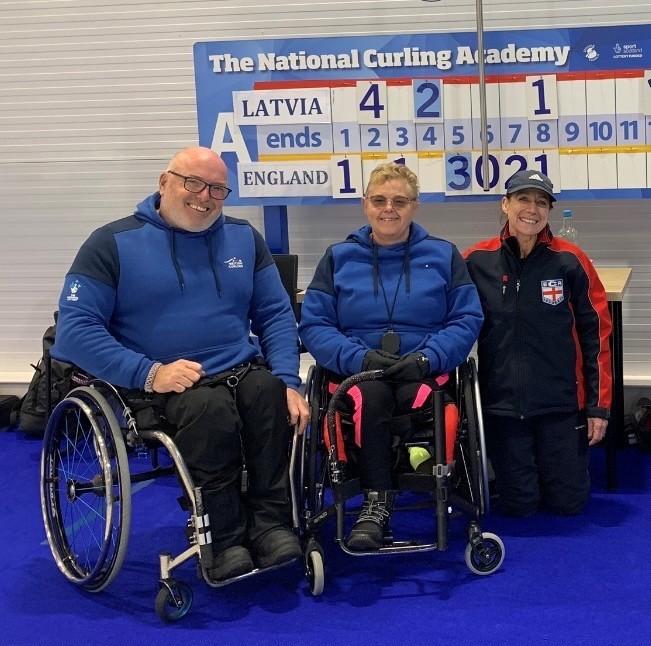
Image: (left to right) Stewart Pimblett, Karen Aspey and Salwa Bowen.
How did you feel when you found out your athletes had been selected?
I was absolutely delighted for them – honestly, chuffed to bits. They’ve worked incredibly hard over the last few years. For some of them, being selected for a Paralympics has exceeded anything they imagined possible. One athlete in particular never saw himself as a professional sportsman. Two years ago, he wasn’t sure he was good enough to compete at the top level. To see him now selected for a Paralympic Games is extraordinary. They deserve every bit of this.
How long have you been working with them?
I’ve been working with Stewart and Jason since October 2023. I started working with Karen on a trip to Copenhagen and have continued at subsequent training camps in Stirling. The development during that time has been huge – physically, technically and mentally. It’s never a straight line in elite sport. There are always dips in confidence, small injuries, setbacks and questions about whether you’re progressing fast enough. Being there across that whole journey makes selection even more special.
What’s different about working with para curlers compared to able-bodied athletes?
The biggest learning curve for me was understanding the full competitive environment. In clinic, you treat injuries. But when you travel with a team, you see everything else: how they manage airports, flights, luggage, medication declarations, hydration, sleep, diet — all of which can impact performance. With spinal injury athletes, for example, you’re always mindful of issues like hydration, diet and the risk of urinary tract infections when travelling. Those factors can affect performance just as much as a shoulder niggle. It’s about looking at the whole athlete, not just the injury.
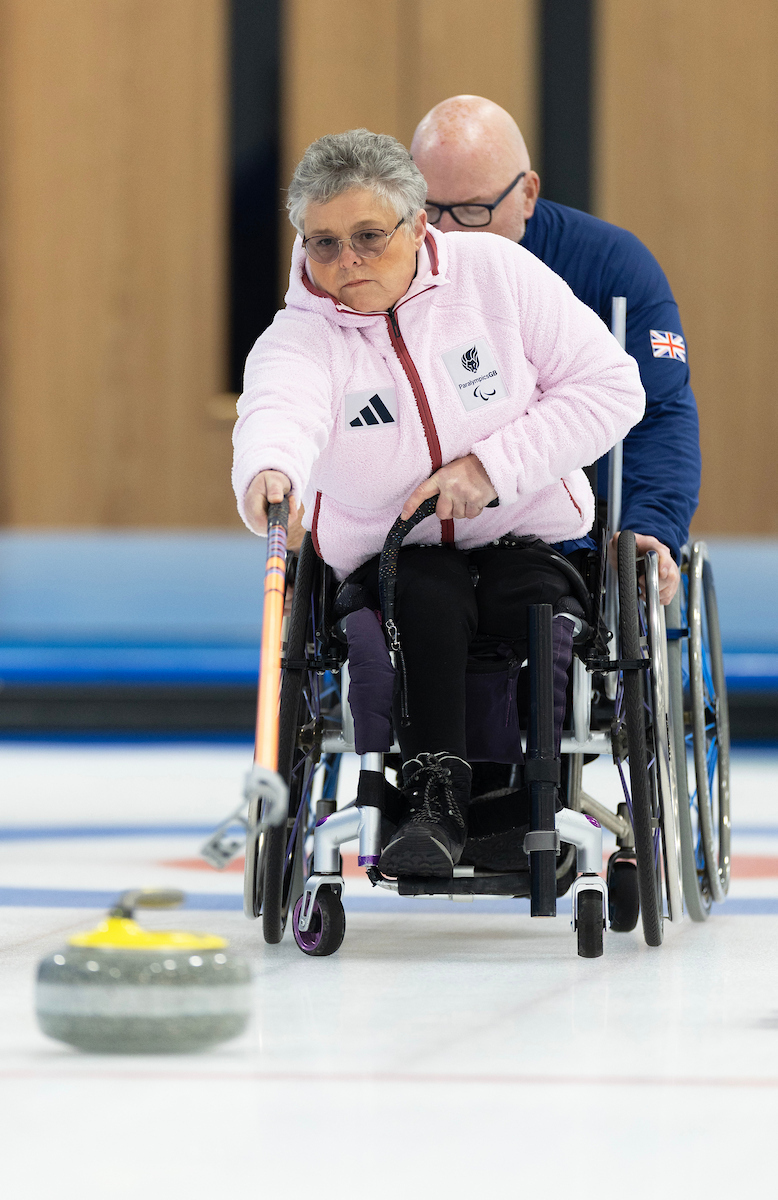
Image: Jason Kean in action on the ice.
Credit: British Curling PPA
You’ve spoken about the importance of warm-ups. Why are they so crucial in para curling?
I didn’t fully appreciate how influential the warm-up could be until I travelled with them. Para curling is like chess on ice. It’s incredibly tactical and cognitively demanding. You have time to think — and sometimes that can work against you. So the warm-up isn’t just physical, it’s mental.
Physically, we focus on neck mobility, shoulder activation, trunk rotation – adapting exercises depending on the level of spinal injury. One athlete might need assistance with trunk rotation; another might have more stability and different needs. It’s completely individual.
Mentally, we layer in cognitive games while they’re activating – countdown challenges, word games, quick team tasks – to get their brains switched on. Music became part of it too. Each athlete chose songs that energised them. That helped lift the mood before big matches and reduce tension. Before some of the world-level games, the stress in the room was palpable. The aim was to get them focused but calm – ready, not overwhelmed.
The coaches actually asked to film the warm-up routine to share more widely, which was lovely feedback.
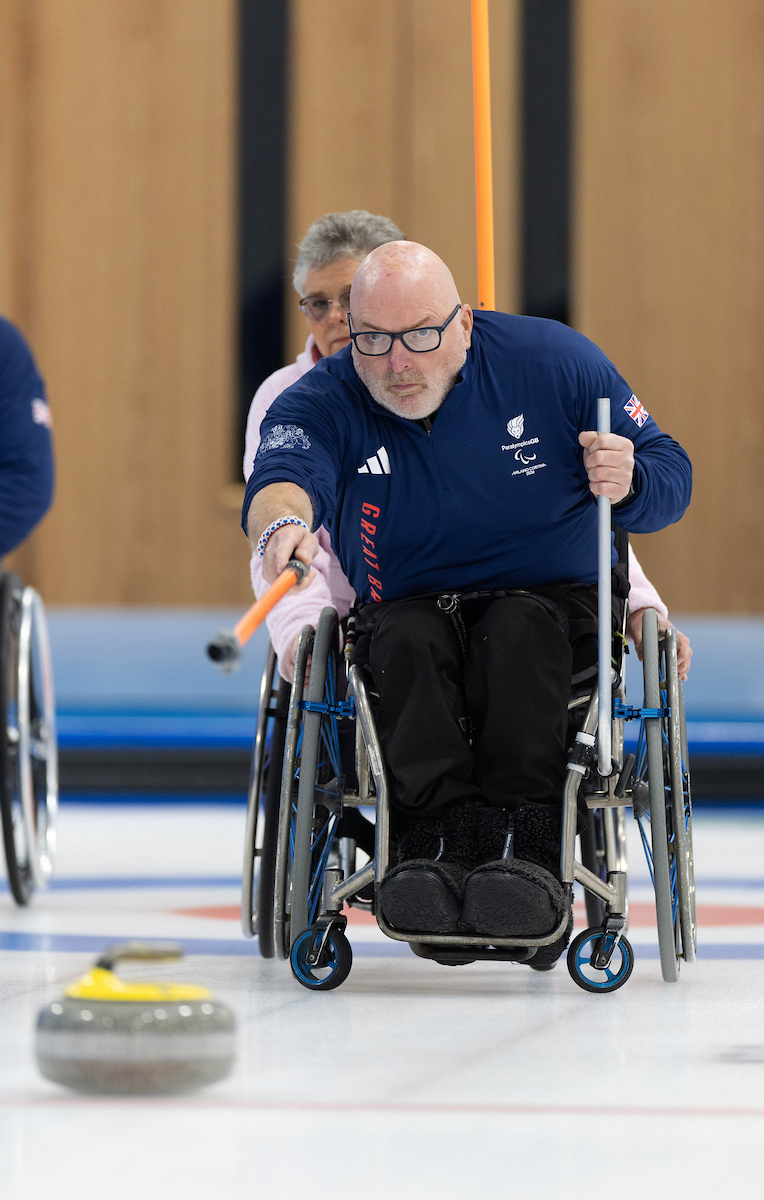
Image: Karen Aspey releasing the stone.
Credit: British Curling PPA
How important is the psychological side of your role?
Massively important – although I’m very clear about where my role ends and when to refer on.
One athlete struggled when matches became high-stakes. If he had too much time to think before a shot, his internal dialogue would shift to “I’m going to miss this.” And sometimes that’s exactly what happened. We had honest conversations about that narrative — about feeding the brain something different. But I also referred him to a sports psychologist. That was beyond my wheelhouse. Knowing when to put your hand up and say, “This needs specialist support,” is crucial. That’s how you get the best out of the athlete.
How closely do you work with the NGB and with other practitioners?
It’s always collaborative. I share screening findings with the National Governing Body physios. We compare notes: what am I seeing? What are they seeing? Are there specific demands of curling we need to prioritise?
The strength and conditioning team have been fantastic too. For example, I designed a simple pulley system to help one athlete stretch more effectively given his trunk limitations. The S&C team helped integrate it into their training space. It’s about problem-solving together.
Image: Stewart Pimblett showing great focus.
Credit: British Curling PPA
You’ve travelled with the team. How much difference does that make?
It makes a huge difference. You can’t fully understand a sport from a treatment room. Watching training, seeing the competition environment, even trying to throw a stone from a wheelchair myself — it all deepens your understanding. More importantly, it builds trust.
When you spend that much time with athletes, you can tell when something isn’t right before they say anything. Communication isn’t always verbal. You pick up on body language, eye contact, small shifts in mood. That relationship is invaluable when they hit a low point.
What have the biggest challenges been over the past few years?
Confidence dips, definitely. There are moments in a Paralympic cycle where the goal feels enormous. Some of the athletes questioned whether they were good enough. Some worried about small injuries derailing everything. My role was often to remind them: you can’t be perfect for four years straight. It’s okay to have setbacks. What matters is how you respond next. And they responded brilliantly.
What would your message be to Stewart, Jason and Karen as they head to Milano Cortina?
I would say ‘If you believe the impossible… the incredible can happen.’ If they truly believe they can do it, they absolutely have the ability to go out there and deliver. They’ve done the hard work. Now it’s about trusting it.
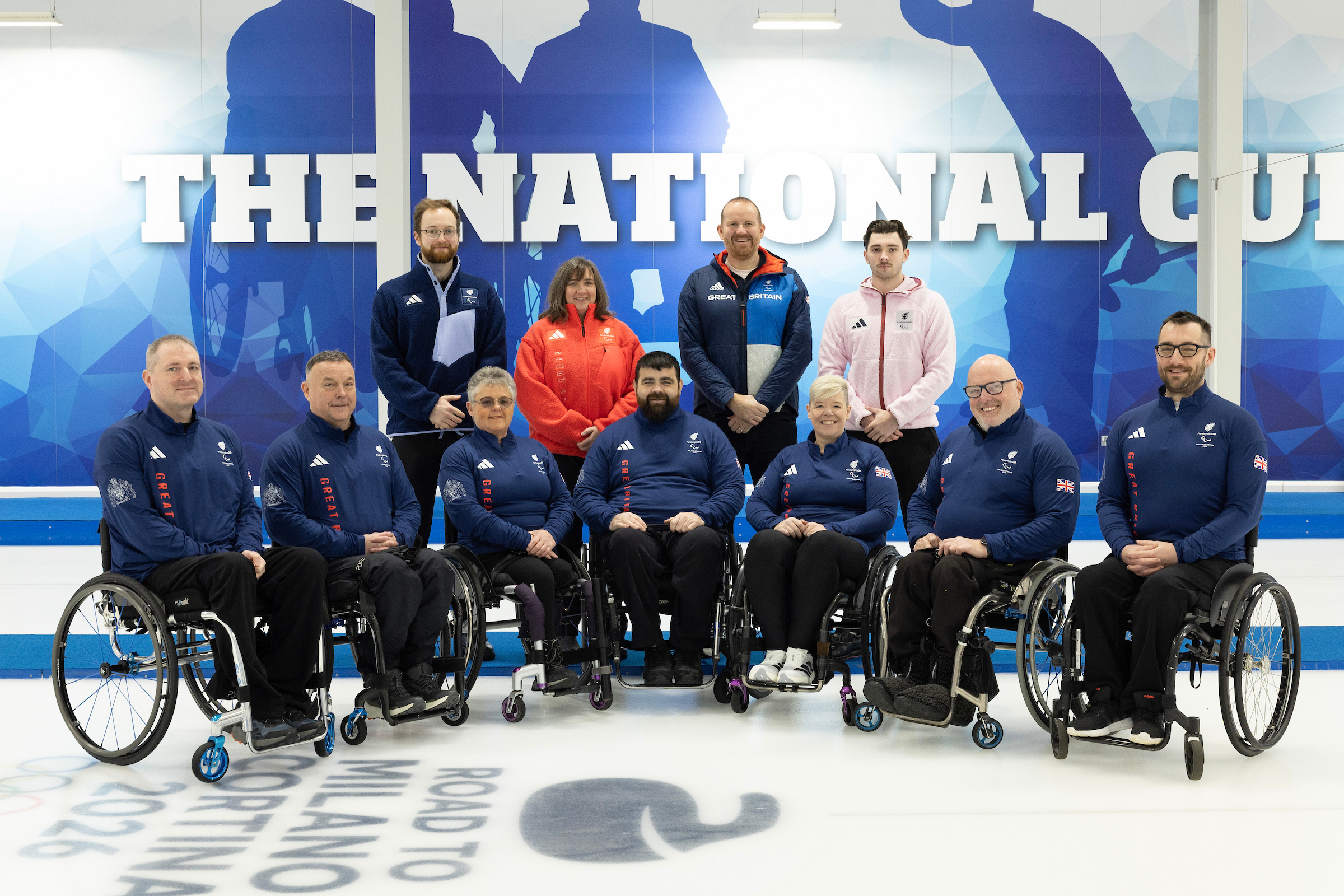
Photo (below) The full Paralympic Curling Team, with Chef and Coaches
Credit: British Curling PPA Graeme Hart